Security

Iranian Hackers targeting US oil, gas, and electric companies

Published: May 26, 2013 Reading Time: 2 min

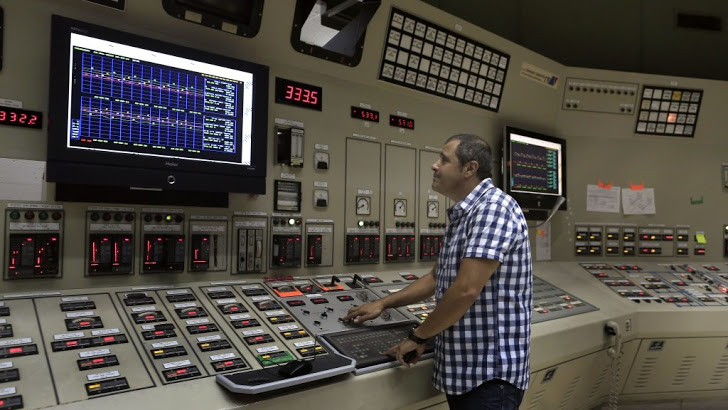
The Hacker News reported: For all the talk about China and the Syrian Electronic Army, it seems there’s another threat to U.S. cyber interests i.e. Iran. Series of potentially destructive computer attacks that have been targeting American oil, gas and electricity companies tracked back to Iran. Iranian hackers were able to gain access to control-system software that could allow them to manipulate oil or gas pipelines. Malware have been found in the power grid that could be used to deliver malicious software to damage plants. The targets have included several American oil, gas and electricity companies, which government officials have refused to identify. ...

Continue Reading

Apple closes QuickTime vulnerabilities on Windows

Published: May 23, 2013 Reading Time: 1 min

Apple has released a security update for its QuickTime media framework for Windows. Version 7.7.4 of the software closes 12 critical security holes causing memory corruption and buffer overflows when processing a number of media formats. The vulnerabilities affect Windows 7, Vista and XP SP2 or later and could be exploited to cause arbitrary code execution and application crashes. The vulnerabilities affected the playback of MP3, H.263, H.264, TeXML, JPEG, QTIF, Sorenson Video and FPX files as well as the handling of dref, enof and mvhd atoms within the program. All of the problems were reported by researchers working with HP’s Zero Day Initiative, five of them by Tom Gallagher and Paul Bates from Microsoft. ...

Continue Reading

Symantec vs AV-Comparatives, Which one do you trust?

Published: April 25, 2013 Reading Time: 5 min

Cross-posted from PCMag SecurityWatch: Last week independent antivirus lab AV-Comparatives released the results of an on-demand antivirus detection test. The fact that Microsoft came in near the bottom wasn’t big news; the fact that Symantec scored even lower was surprising indeed. In a blog post released today, Symantec decried the entire practice of performing on-demand malware scanning tests, calling it “misleading.” In the early years of antivirus testing, every test was an on-demand scanning test. Researchers would assemble a collection of known malware, run a full scan, and record the percentage of samples detected. Modern labs work hard to devise tests that more closely reflect a user’s real-world experience, taking into account the fact that the vast majority of infections enter the computer from the Internet. Symantec contends that only the real-world sort of test is valid; I don’t entirely agree. ...

Continue Reading

LulzSec Hacker Gets A Year For Sony Hack

Published: April 20, 2013 Reading Time: 2 min

A former LulzSec hacker has been jailed for a year for ransacking Sony Pictures Entertainment’s computer systems. Cody Kretsinger, 25, from Decatur, Illinois – better known to his fellow LulzSec cohorts as “Recursion” – was also ordered to carry out 1,000 hours of community service, and a year of home detention, following his release from prison. He was sentenced by a Los Angeles court on Thursday, Reuters reports. Kretsinger had pleaded guilty to a single count of conspiracy and unauthorized impairment of a protected computer (i.e. computer hacking) in a plea-bargaining agreement. Kretsinger admitting breaking into the Sony Pictures website and extracting information which he passed on to other members of LulzSec, who leaked the data in order to embarrass Sony, a hated enemy of the hacktivist group. ...

Continue Reading

Boston Marathon Bombing Links May Hide Java-Based Exploits

Published: April 17, 2013 Reading Time: 3 min

PCMag: My social media accounts and email inbox are full of links to stories about the horrific incident in Boston earlier this week. I am reading about the victims, the bystanders and first responders that rushed to help, and looking for updates on the investigation. It turns out I should be careful about what links I click on, as cyber-criminals have already started exploiting the tragedy for their own nefarious purposes, security experts told SecurityWatch. ...

Continue Reading

Microsoft to plug holes in Windows Defender in Patch Tuesday

Published: April 5, 2013 Reading Time: 1 min

Microsoft’s Patch Tuesday on 9 April will be an important spring cleaning day; the company plans to implement nine security bulletins. One of the bulletins deals with vulnerabilities in Windows Defender for Windows 8 and RT; the hole is rated as important and can be exploited to achieve elevated privileges. The headline bulletins will be the two critical security holes, one of which affects all versions of Windows and Windows Server, and another critical vulnerability which can be found in all versions of Internet Explorer. Whether the Internet Explorer fix will be addressing the IE vulnerability revealed at the recent Pwn2Own contest is unclear though. Both critical holes allow for remote code execution. ...

Continue Reading

Russian malware spies on US ATMs

Published: March 31, 2013 Reading Time: 2 min

Security firm Group-IB has identified a malware program called Dump Memory Grabber that can take debit and credit card data from point-of-sale (POS) terminals and ATMs. The researchers say that the program has already been used to steal data from clients of US banks including Chase, Capital One, Citibank, and Union Bank N.A. as well as from clients with Nordstrom-branded cards. SecurityWeek reports the author of Dump Memory Grabber has put a video online to teach other hackers how it works. The Windows program written in C++ reads the target system’s memory using an external tool called mmon.exe. ...

Continue Reading

Backdoor Uses Evernote as Command-and-Control Server

Published: March 29, 2013 Reading Time: 1 min

With its rich functionality and accessibility, Evernote is a popular note-taking tool for its many users. Unfortunately, it may also provide the perfect cover for cybercriminals’ tracks. We recently uncovered a malware that appears to be using Evernote as a communication and control (C&C) server. The malware attempts to connect to Evernote via https://evernote.com/intl/zh-cn, which is a legitimate URL. The sample we gathered consists of an executable file, which drops a .DLL file and injects it into a legitimate process. The said .DLL file performs the actual backdoor routines. ...

Continue Reading

Turkish FlashPlayer? no! It’s malware

Published: March 28, 2013 Reading Time: 1 min

I recently came across the file “FlashPlayer.exe” during the course of regular research. The file had been distributed with the file name FlashPlayer.exe and not surprisingly, when executed, it shows the following GUI, partly written in Turkish: Obviously, it’s disguised as an Adobe Flash Player 11 installer. Here is more info about the file: 1 2 3 4 5 6 7 8 9 10 File Name: FlashPlayer.exe MD5: e2856b1ad6c74c51767cab05bdedc5d1 SHA1: 1ac150ddb964722b6b7c96808763b3e4d0472daf CRC32: a8464606 SHA-256: b5f37cc44365a5a1b240e649ea07bbb17959ceddc3f8b67a793df694a6f03a88 SHA-512: e2d1388bd5feec51227cfa10a5606f7d3bc58f12ea95d688acb5178ff31a156a1092f739e7dd276f4c5368d89c33ed6a15b08ff5df294b9c3647905c1083921d SHA-384: 5d622afcf87e33334a446df5dfd2be7769cab596cc9a121bfd6269bc85ee980f75e1a2d1472f0eb379788845230d883b File Size: 561,152 Version: 2.01 Source: hxxps://flash-player-download.com/FlashPlayer.exe VirusTotal: Latest Report ...

Continue Reading

IRS uncorks Dirty Dozen Tax Scams for 2013

Published: March 26, 2013 Reading Time: 7 min

The Internal Revenue Service today reminded taxpayers that there are plenty of scam artists and cybercriminals that want your money. The tax collection agency issued its “Dirty Dozen” list of tax scams that it says peak at this time of year and include: Identity theft Tax fraud through the use of identity theft tops this year’s Dirty Dozen list. Identity theft occurs when someone uses personal information such as your name, Social Security number (SSN) or other identifying information, without your permission, to commit fraud or other crimes. In many cases, an identity thief uses a legitimate taxpayer’s identity to fraudulently file a tax return and claim a refund, the IRS said. ...

Continue Reading